The Screen Time Battle Most Coptic Parents Are Losing
No, it is not too late to reset digital boundaries. The key is replacing passive screen rewards with healthier habits that still meet a child’s emotional needs.
Listen to the article instead
A habit-based framework for Coptic parents.
A question I hear often from Coptic parents is:
Did I already miss my chance?
My child has had unlimited screen access for years.
They are already attached to the iPad.
They do not know how to function without YouTube or gaming.
They rely on:
- lectures
- guilt
- stricter punishments
- random screen limits
- emotional conversations
- “because I said so”
And then they wonder why nothing changes.
Modern behavioral psychology, habit research, and even ancient Christian spiritual practice all point to the same truth: you cannot permanently remove a powerful habit unless you replace it with something that satisfies the same emotional need.
That is the real battle.
Not screens. Not technology. Not even discipline.
The battle is over dopamine, attention, and emotional regulation.
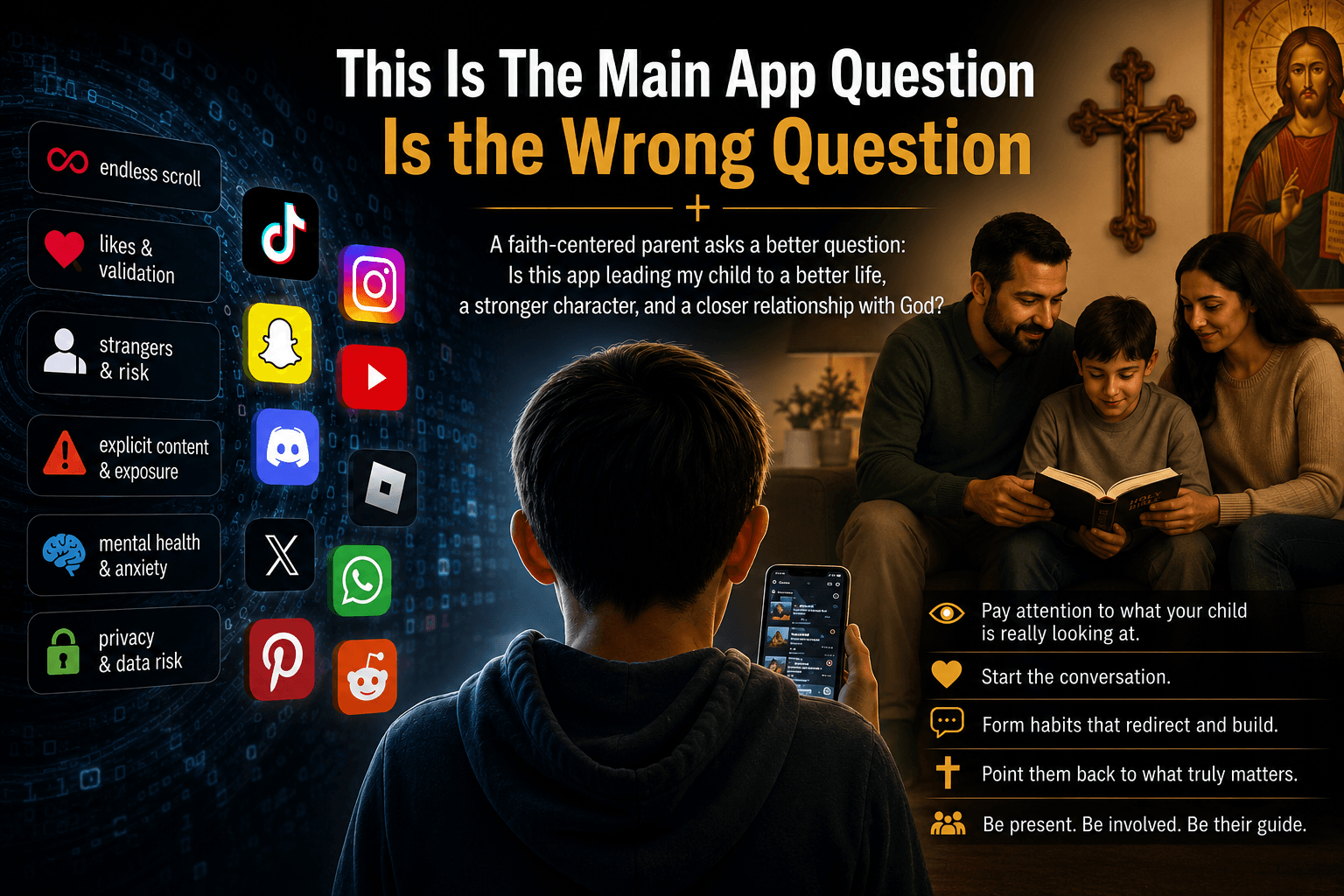
And whether parents realize it or not, the apps on your child’s device are competing against family life itself.
Not because your child is weak. Because the system is engineered that way.
The Mistake Most Parents Make
A child comes home from school mentally exhausted.
Their brain wants:
- relief
- stimulation
- autonomy
- escape
- reward
So they grab the iPad.
Instant dopamine. Instant entertainment. Instant control.
Parents usually respond by attacking the behavior:
Get off the screen. You’ve had enough. Go do something productive.
But that approach ignores the deeper habit loop.
Your child’s problem is not simply “screen addiction.” The screen is solving a problem for them.
Usually:
- boredom
- stress
- loneliness
- exhaustion
- overstimulation
- lack of structure
- emotional escape
If parents only remove the screen without replacing the emotional reward, the child experiences the boundary as punishment, not formation.
That is why so many digital boundaries fail after a few days.
The Shift Coptic Parents Need to Understand
Here is the breakthrough idea:
You cannot replace high-dopamine habits with low-dopamine alternatives.
This is where generic parenting advice falls apart. Telling a child to read quietly, help around the house, just go outside, or sit in silence will usually lose against an algorithm specifically designed to hijack attention.
The replacement must feel emotionally rewarding.
Not identical to screen stimulation. But compelling enough that real life starts becoming attractive again.
Replace Passive Dopamine With Active Dopamine
Do not replace screens with “healthy habits” that feel emotionally empty to the child. Replace passive dopamine with active dopamine.
Passive dopamine looks like:
- endless scrolling
- autoplay videos
- binge gaming
- algorithm-fed entertainment
- constant novelty with zero effort
Active dopamine looks like:
- movement
- challenge
- creativity
- social connection
- mastery
- meaningful responsibility
The 5 Replacements That Actually Work
Not every child is the same. There is no magical universal replacement. But there are categories that consistently work because they satisfy the brain’s need for stimulation and reward in healthier ways.
Five replacement lanes to try
- 1Physical intensityHelp the body release stress through movement and effort.
- 2Fast mastery activitiesGive the child quick wins and visible progress offline.
- 3Social dopamineReplace digital connection with real connection.
- 4Productive responsibilityLet the child feel trusted and needed in the family.
- 5Controlled digital transition ritualsReduce chaos without declaring war on every screen moment.
1. Physical Intensity
Many children are carrying stress in their bodies after school. Movement regulates the nervous system far better than parents realize. This is especially true for boys.
Not “exercise.” Intensity.
Examples:
- trampoline time
- basketball
- wrestling with dad
- bike riding
- dance competitions
- obstacle courses
- soccer in the backyard
- scooter races
2. Fast Mastery Activities
Children love competence. Screens dominate because they provide constant tiny rewards. Offline life needs faster feedback loops.
Examples:
- Lego build challenges
- Rubik’s Cube races
- speed stacking
- chess puzzles
- cooking challenges
- drawing competitions
- music practice with measurable goals
- beginner coding projects
The key is quick wins. Not perfection. Not long lectures about discipline. Progress.
3. Social Dopamine
Many children are not addicted to screens. They are addicted to connection. Screens simply became the easiest place to find it.
Examples:
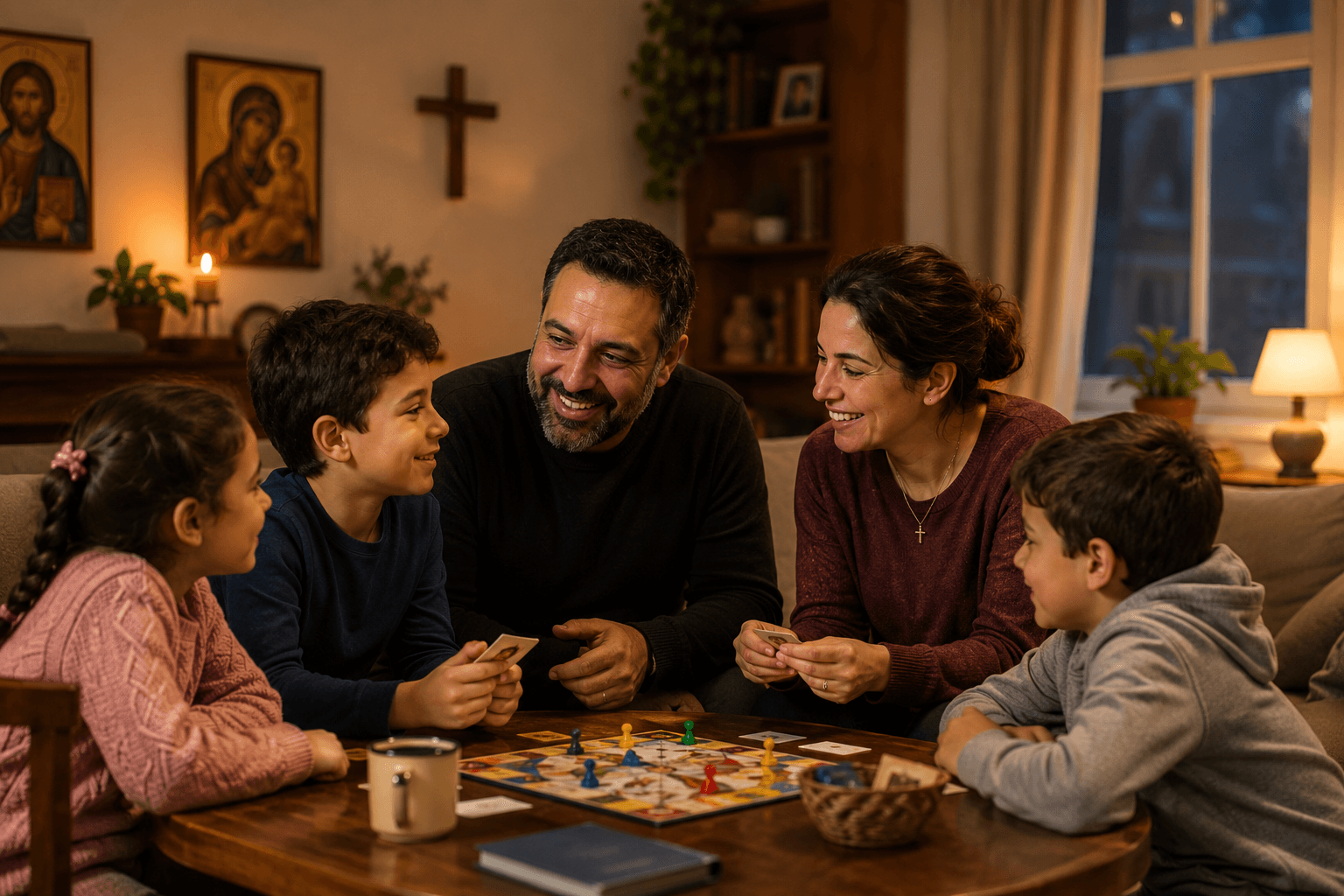
- family card games
- sibling competitions
- church friend hangouts
- cooking together
- evening walks
- board game tournaments
- sports with friends
- family challenge nights
This is where Coptic family culture can become a massive strength instead of a weakness. Our homes already value gathering, relationships, and shared life.
The antidote to digital isolation is not restriction alone. It is meaningful presence.
4. Productive Responsibility
This one surprises many parents. Children actually crave responsibility when it makes them feel trusted and important.
Examples:
- helping prepare dinner
- managing part of family night
- helping younger siblings
- organizing sports equipment
- setting up for prayer time
- preparing church bags
- helping with family tasks
5. Controlled Digital Transition Rituals
This may be the most practical strategy of all. Most parents try to go directly from school to zero screens. That creates emotional friction immediately.
Instead, create a transition rhythm.
Example after-school transition rhythm
- 1SnackBegin with food, water, and a few calm minutes.
- 220 minutes of approved YouTube on the family TVKeep the screen public, limited, and predictable.
- 3Devices awayMove out of personal device mode before the rest of the evening.
- 4Homework, activity, or family routineShift into the next expected responsibility.
- 5Evening entertainment later if responsibilities are completedUse screens as part of a rhythm, not as the default setting.
What Orthodox Christianity Understood Long Before Neuroscience
This is where the conversation becomes deeper than parenting trends.
Orthodox Christianity has always understood that human beings cannot simply remove desire. Desire must be redirected.
The Church does not teach fasting as empty deprivation. It teaches replacement:
- less noise, more prayer
- less consumption, more presence
- less distraction, more communion
- less impulsiveness, more self-control
That is not outdated spirituality. That is behavioral formation.
The modern digital world trains children toward:
- constant stimulation
- fragmented attention
- emotional impulsivity
- passive consumption
The Orthodox life trains the opposite:
- attentiveness
- patience
- self-regulation
- embodiment
- silence
- discipline
- presence with God and people
This is why digital boundaries matter so deeply for Coptic families.
Not because screens are evil. But because attention is sacred.
Is It Too Late?
No.
Because habits are not permanent identities. They are trained patterns. And patterns can be rebuilt.
But parents need to stop thinking only in terms of restriction.
The goal is not merely “less screen time.” The goal is:
- healthier nervous systems
- stronger family rhythms
- better emotional regulation
- deeper presence
- restored attention
- children who enjoy real life again
Tags
Share this post
Comments
Be the first to leave a comment.